AI product photography for fashion and ecommerce
By Vayem Studios · September 2026
AI product photography turns real product references into generated catalogue or campaign images. At Vayem Studios, the result is AI-generated, not a photo of a model in a studio. The product still has to look like the product a buyer will receive.
What goes in, and what comes out
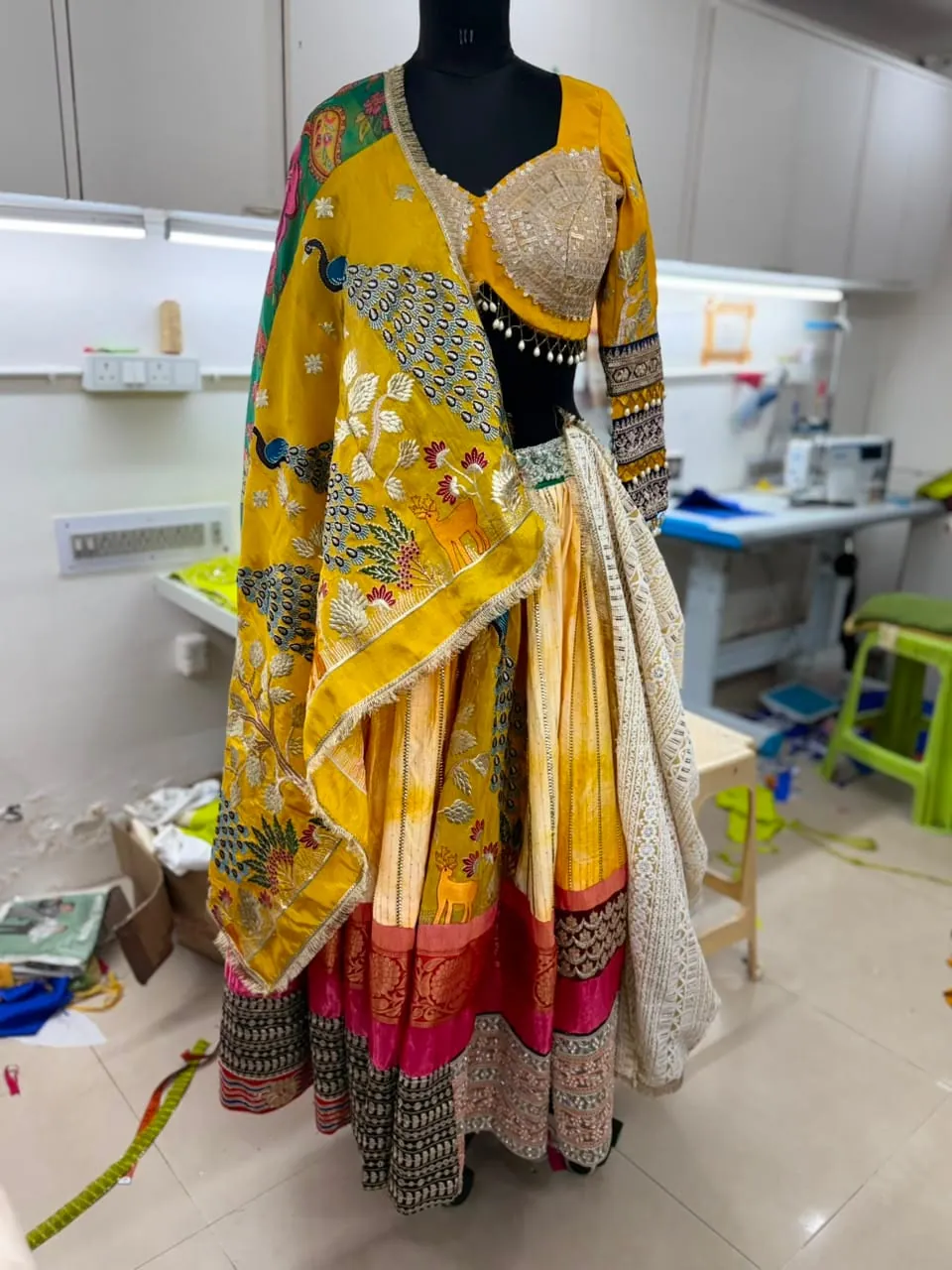
A garment reference might be a clear phone photo of the finished piece on a mannequin. A brand can specify the backdrop, styling, poses and the views it needs for a product page. The output can include a front and back view on a generated model, plus campaign crops, depending on the brief. This is not a substitute for an accurate product reference.
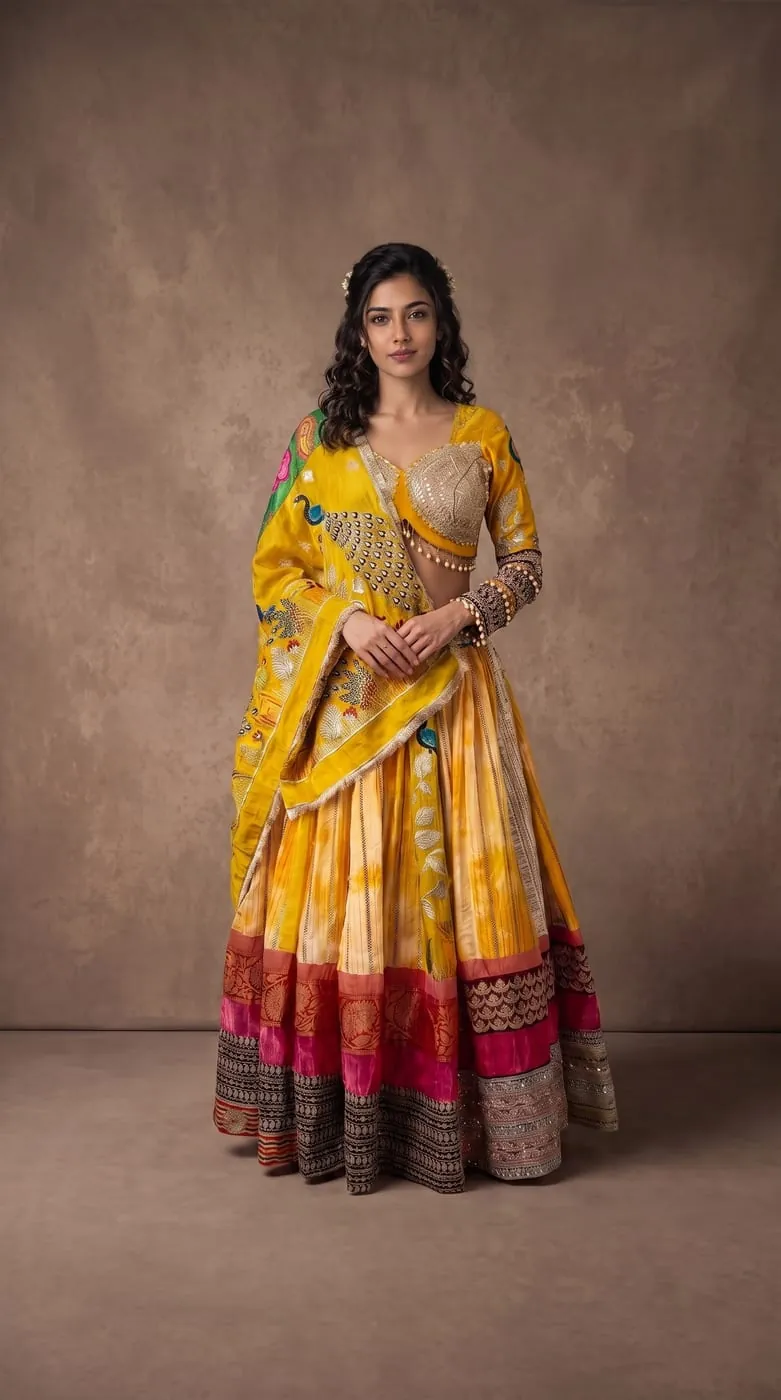
Our garment case studies show three festive lehenga projects with the original workshop reference and delivered front/back images side by side. You can compare the embroidery, border and colour yourself rather than rely on a claim about quality.
The hard part: making a set consistent
A single striking image is not enough for a catalogue. The garment's print, cut, colour, embroidery and closures must remain faithful across angles. Model appearance, lighting and scale should also feel like one collection. We review a series as a series. When a detail drifts, we correct or reject the image rather than presenting it as a faithful product view.
A garment comparison you can inspect
In the Dusk before-and-after set, the source image shows a yellow lehenga on a workshop mannequin. The delivered front image places it on a generated model against a plain studio backdrop. Compare the sleeve bands, gold blouse decoration, yellow dupatta motifs and pink-red hem across the two images. That visual comparison is the evidence here; it is not a measured claim about conversion, speed or manufacturing accuracy. The back view is available on the case-study page for another angle.
Where it fits, and where it doesn't
This approach is useful when a fashion brand needs several coordinated visuals but wants to avoid reshooting the garment for each concept. It also lets a team test different creative directions. It is less suitable if the only product reference hides important details, or if a marketplace requires a literal unaltered photograph. AI can invent seams, fabric texture or reflective details; a human check against the physical product remains essential before publication.
What to ask before commissioning a set
- What product references and detail close-ups will the studio need?
- How are colour, print and construction checked across front and back views?
- Will the studio label the work as AI-generated and distinguish concepts from delivered client projects?
- Which formats will you need for product pages, ads and social placements?
See the broader fashion portfolio. If you have garments and a brief ready, tell us about the project.
Common questions
Is this a real model photoshoot?
No. The shown model and setting are AI-generated from product references, and should not be presented as an in-person shoot.
Can AI guarantee every product detail is exact?
No. Fabric, fit and fine decoration need comparison with the physical piece and supplied reference photos. Incorrect images should be revised or removed.
What should a fashion brand send for an AI product shoot?
Send front and back reference images plus close-ups of the print, embroidery, closures and trim. State which details must not change. Where colour is critical, compare approved outputs with the physical garment under consistent lighting rather than trusting a screen alone.
Can one reference photo cover every ecommerce angle?
Usually not reliably. A reference that hides the back or a small construction detail cannot verify an invented view. Ask for more reference images or use a real photograph for the missing angle.